
Route 66 is filled with neon signs, roadside diners, vintage motels, and landscapes that reflect generations of American travel. However, only one national park preserves a section of this legendary highway within its boundaries: Petrified Forest National Park.
Located near Holbrook in northeastern Arizona, the park brings together natural history, Indigenous heritage, paleontology, and Route 66 nostalgia. Visitors can see ancient petrified logs, walk through striped badlands, examine petroglyphs, and stand beside the remains of the Mother Road during a single trip.
For travelers comparing Hotels in Holbrook, staying close to the park makes it easier to explore at a relaxed pace rather than rushing through on the way to another destination.
Is Petrified Forest the Only National Park on Route 66?
Yes. According to the National Park Service, Petrified Forest National Park is the only unit in the National Park System that contains a section of Historic Route 66.
The famous highway was established in 1926 and once connected Chicago with Los Angeles. It became a symbol of mobility, opportunity, and cross-country adventure. Although Interstate 40 later replaced much of the original road, traces of the old alignment remain visible inside the park.
Visitors can stop at the Route 66 Alignment area to see:
- The former roadbed crossing the landscape
- A line of weathered telephone poles
- A vintage Studebaker displayed near the old route
- Interpretive information about early highway travel
- Sweeping views across the surrounding grassland
These surviving details allow visitors to picture the period when families, workers, and vacationers traveled west along what became known as the Main Street of America. The road itself is no longer open for driving inside the park, but its physical traces preserve an important chapter of American history.
What Makes the Petrified Forest So Extraordinary?
The name may suggest a conventional forest, but visitors will not find a dense collection of standing trees. Instead, enormous pieces of mineralized wood rest across an open landscape of grasslands, mesas, badlands, and dry washes.
More than 200 million years ago, fallen trees were carried into ancient river systems and buried beneath sediment. Groundwater rich in dissolved minerals moved through the buried wood. Over time, minerals such as quartz replaced much of its organic material while preserving the trees’ internal structures.
Iron, manganese, and other minerals created the reds, yellows, purples, whites, and darker tones visible inside many logs. Their colors can appear especially vivid when sunlight reaches exposed surfaces.
The result is not simply old wood. It is stone that retains the form and detail of trees that lived during the Late Triassic Period. The park protects one of the most continuous sections of Triassic-aged rock in the world, including formations deposited by river systems between approximately 208 and 225 million years ago.
Petrified Wood Is Only Part of the Story
Travelers who expect the park to be entirely about fossilized logs are often surprised by its scale and variety. Petrified Forest extends across more than 200,000 acres within the broader Painted Desert region.
Its primary environment is semi-arid grassland rather than a classic sandy desert. The landscape supports plants and wildlife adapted to dry conditions, seasonal monsoon rain, and occasional winter snow.
A visit may include colorful badlands, expansive prairie, wildlife, wildflowers, fossils, ancient architecture, and views stretching for many miles. This variety is one reason the park rewards travelers who allow time for several stops rather than treating it as a quick roadside attraction.
Where Can You See the Park’s Most Memorable Landscapes?
The main park road extends for approximately 28 miles and connects the northern entrance near Interstate 40 with the southern entrance near Highway 180. Overlooks, historic sites, trailheads, and museums are positioned along the route.
Some notable places to include are:
Painted Desert Overlooks
The northern section introduces visitors to red, rust, lavender, and gray badlands. Several overlooks provide broad views across sculpted hills and distant mesas. Changing light can make the colors appear different throughout the day.
Painted Desert Inn
This National Historic Landmark overlooks the Painted Desert from Kachina Point. The building has connections to homesteading, Route 66 tourism, the Civilian Conservation Corps, and the region’s Indigenous communities. It once provided Route 66 travelers with lodging, meals, and souvenirs.
Puerco Pueblo
A short paved trail leads past the remains of an ancestral Puebloan community. The loop also provides opportunities to view petroglyphs without touching or disturbing them.
Newspaper Rock
This overlook provides a view of a concentrated collection of petroglyphs. More than 650 individual designs have been documented in the area, with some dating back approximately 2,000 years.
Blue Mesa
Blue Mesa is known for layered hills in shades of blue, purple, gray, and green. A one-mile loop descends among the badlands and passes scattered pieces of petrified wood. The initial section is steep, so visitors should consider their mobility and footwear before starting.
Crystal Forest and Giant Logs
Crystal Forest has a 0.75-mile loop that passes numerous petrified logs containing visible quartz crystals. Giant Logs, located behind the Rainbow Forest Museum, features some of the park’s largest examples.
Make Your Route 66 Visit More Relaxing
After hours of driving, hiking, and photographing the park, having a comfortable place nearby can make the trip feel more manageable. GreenTree Inn of Holbrook is located off Interstate 40 and approximately 23 miles from Petrified Forest National Park.
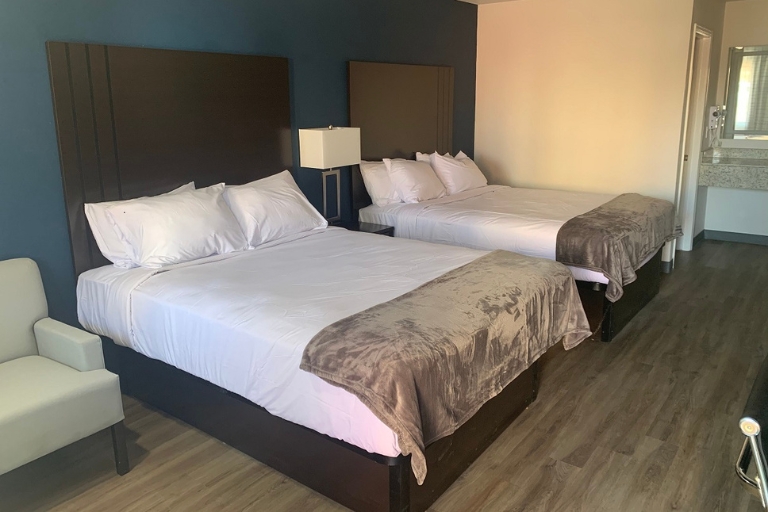
Travelers browsing Hotels in Holbrook can use the property as a convenient base for visiting the national park, the Painted Desert, and the Navajo County Historical Society Museum. Its renovated, non-smoking accommodations include king rooms, two-queen rooms, and suites.
Property and room amenities listed on the hotel website include:
- Complimentary high-speed Wi-Fi
- Free parking
- Daily breakfast
- A fitness center
- Guest laundry facilities
- Outdoor seating areas
- A computer and printer
- Microwaves and mini-fridges
- In-room coffee makers
- Flat-screen televisions
- Accessible rooms and parking
If you want a quieter evening before or after your visit to the park, book a room at our hotel and give yourself time to recharge. Families, couples, solo travelers, and pet owners can book our hotel to suit their travel needs while staying close to the region’s major attractions.
How Much Time Should You Allow for Petrified Forest?
Visitors can drive through the park in a few hours, but a rushed visit may leave little time for trails, overlooks, museums, and cultural sites. A half-day allows for the scenic drive and several major stops. A full day provides a more complete introduction.
If You Have Two to Three Hours
Focus on a few priority locations, such as:
- Painted Desert overlooks
- The Historic Route 66 alignment
- Blue Mesa
- Crystal Forest or Giant Logs
If You Have Half a Day
Add Puerco Pueblo, Newspaper Rock, and one or two short trails. This schedule gives you more time to read exhibits and appreciate changes in the landscape.
If You Have a Full Day
Explore the park from one entrance to the other. Visit both museums, walk multiple trails, stop at the overlooks, and allow time for photography and rest breaks.
Travelers choosing among Hotels in Holbrook may benefit from planning two nights. Arrive the evening before the park visit, spend the following day exploring, and continue the Route 66 journey after a restful night.
Practical Tips for Planning Your Visit
Conditions in northeastern Arizona can change quickly. Preparation helps visitors enjoy the landscape safely and responsibly.
Before leaving, remember to:
- Check current park hours, fees, closures, and weather conditions on the National Park Service website.
- Carry drinking water, especially during warmer months.
- Wear sturdy walking shoes with reliable traction.
- Use sunscreen, sunglasses, and a hat because shade is limited.
- Keep a safe distance from wildlife.
- Stay on designated trails where required.
- Avoid touching petroglyphs, ruins, or other cultural resources.
- Leave all petrified wood, rocks, plants, and artifacts inside the park.
- Download maps in advance because mobile service may be inconsistent.
- Allow extra time for overlooks and unplanned photography stops.
Park hours change seasonally, and the entrance gates close at the end of the operating day. Confirm the current schedule before setting out.
What Else Can You Explore Nearby?
The national park is the central attraction, but it is not the only place that reveals the area’s character. The Navajo County Historical Society Museum is housed in the historic county courthouse and contains exhibits related to regional history. The city also preserves Route 66 character through its roadside architecture, murals, and reminders of earlier highway travel.
Travelers can extend their itinerary with drives toward Winslow, Flagstaff, or the White Mountains. However, keeping one day focused on the national park allows enough time to appreciate its history and landscape without turning the visit into another hurried highway stop.
Choosing Hotels in Holbrook also places travelers near local dining and services before they continue across northern Arizona.
Experience a Route 66 Landscape Unlike Any Other
Petrified Forest National Park is unique because several remarkable stories occupy the same landscape. Ancient river systems left behind fossil-rich rocks and mineralized trees. Indigenous communities created homes and petroglyphs across the region. Route 66 later carried generations of motorists through the Painted Desert.
Today, visitors can travel through more than 200 million years of natural history while also encountering one of America’s most recognizable road-trip stories.
For a convenient place to unwind near these attractions, plan your stay at GreenTree Inn of Holbrook. Enjoy renovated accommodations, practical in-room features, breakfast, free parking, and access to the park and surrounding destinations. When your travel dates are confirmed, book our hotel and turn your visit into a relaxed Route 66 getaway.
Frequently Asked Questions
1. Is Petrified Forest the only national park on Route 66?
Yes. Petrified Forest National Park is the only park in the National Park System that preserves a section of Historic Route 66 within its boundaries. Visitors can see the former roadbed, old telephone poles, and a vintage Studebaker near the historic alignment.
2. How long should I spend at Petrified Forest National Park?
Plan at least half a day to explore major overlooks, historic sites, and short trails. A full day gives you more time for Blue Mesa, Puerco Pueblo, Painted Desert Inn, Crystal Forest, and the Rainbow Forest Museum.
3. Can visitors take petrified wood from the park?
No. Removing petrified wood, rocks, plants, fossils, or cultural objects from the national park is prohibited. Leave every natural and historic feature where you find it so future visitors can enjoy and study it.
4. Can I drive through Petrified Forest National Park?
Yes. The park’s approximately 28-mile paved road connects its northern and southern entrances. Scenic overlooks, trailheads, museums, and historic locations are accessible from designated stops along the road.
5. What should I bring when visiting Petrified Forest?
Bring plenty of drinking water, supportive walking shoes, sunscreen, sunglasses, and a hat. Download a park map before arriving, check current weather and operating hours, and carry a light layer because temperatures can change throughout the day.